- 10 ping pong ball party games for kidsWhat to grab, the rules, a running order, and scoring that keeps both teams trying.
- Free printable ping-pong party gamesSetup, rules and the birthday quiz as PDFs, with every game written out.
- Grand Slam FAQWhat you need, whether kids need phones, and what arrives when you buy.
- Every guide
12 Cup Games for a Party
10 min readby Casey
A sleeve of plastic cups can supply most of a party’s games. Stack them into pyramids, flip them off the table edge, or use them to catch ping-pong balls. The twelve games below explain the setup and winning rule for each one, followed by a six-round plan for two teams.
TLDR For a cup-games party, begin with a pyramid race, follow with partner cup catches and finish with a flipping relay. You’ll need about 50 empty plastic cups, ping-pong balls, 2 bowls and 2 spoons. Reuse the supplies between games, keep score for 2 teams and give each player a turn before repeating.
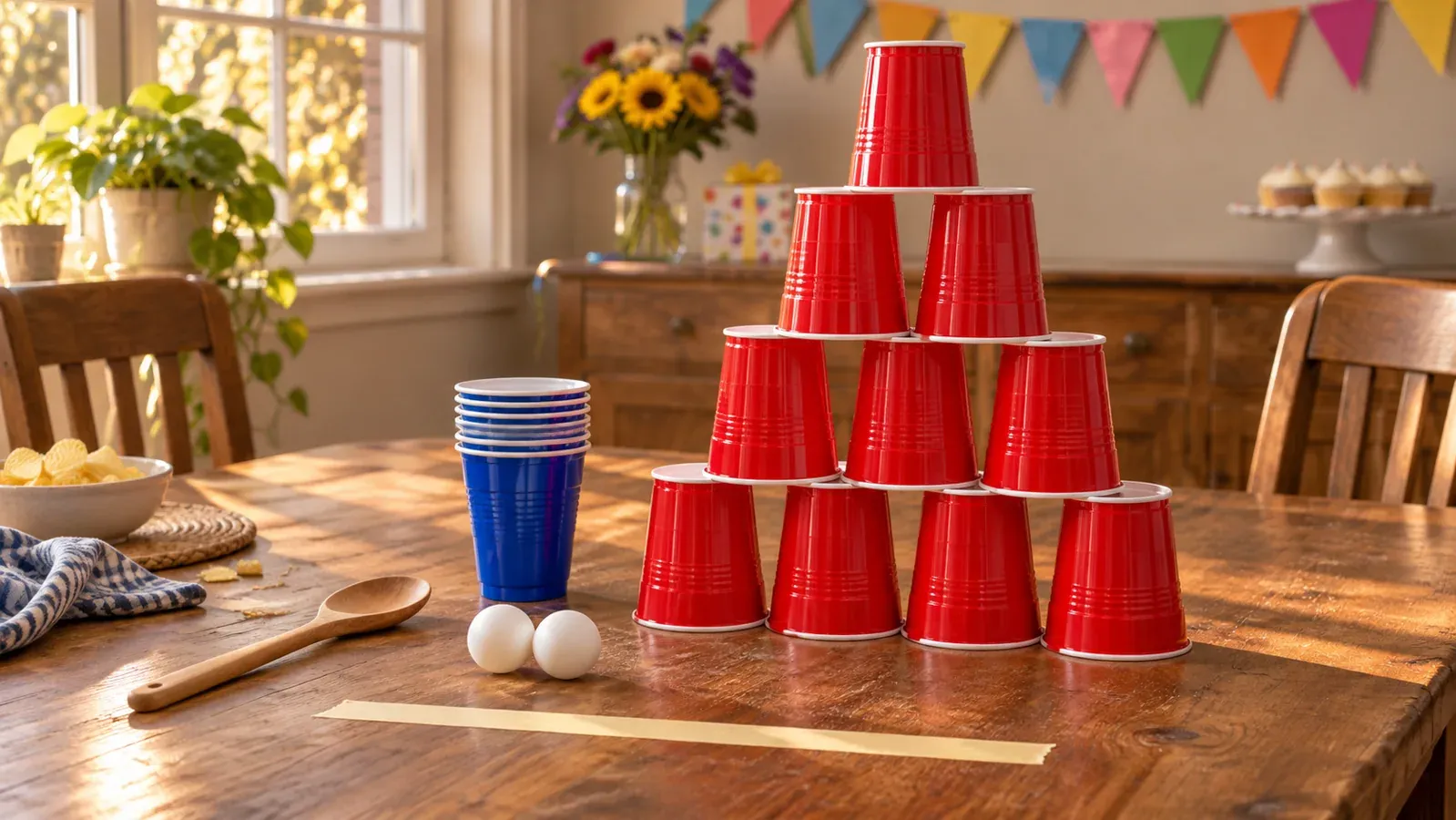
What to grab before the first round
Put about fifty sturdy plastic cups, a bag of ping-pong balls, two bowls, two spoons, masking tape, a marker, paper and a timer beside a cleared table. Use roughly matching cups on both sides: a rigid cup and a soft, crumpled one will flip differently.
Divide the cups between two colors if you have them, or mark team cups with tape. You reuse the same supplies between rounds. Twenty cups cover the biggest pyramid race; fifty leaves room for targets and spares. Keep the unused cups beside the table so you can reset quickly.
Keep cups empty, clear breakables off the table and leave relay lanes free of chairs. Pause the clock to collect balls that roll into somebody’s path. A cup that cracks goes in the trash. Set up one game first; let the next game’s supplies wait in a bowl.
The free sheets below cover Grand Slam’s cup-and-ball challenges. The full rules for all twelve games in this guide follow, including the stacking and flipping games.
Stacking games: build it, then bring it down
Give both sides the same number of cups and a clear patch of table. Each of these games turns a stack into something you build, then take apart.
1. Ten-cup pyramid race
Grab: ten cups per player. Play: one player from each team, up to sixty seconds.
Build a pyramid with four cups on the bottom, then three, two and one. Collapse it into one nested stack. The first finished wins; if neither finishes by the buzzer, call a tie. Fallen cups can be rebuilt while the clock runs. Give both players a practice build first.
This is Stack Attack, one of Showdown’s cup challenges. Its Flip Rush and Stack Relay games also appear below.
2. Six-cup stacking relay
Grab: six cups per team. Play: whole teams, ninety seconds.
The first player builds a three-two-one pyramid, collapses it into a single stack, then tags the next teammate. Keep cycling. Count one point for each completed build-and-collapse; a half-built pyramid at the buzzer adds nothing. Pass after about fifteen seconds if someone is stuck. This is Showdown’s Stack Relay format.
3. Tallest tower
Grab: ten cups per team. Play: one builder from each side, sixty seconds.
Build the tallest freestanding structure you can with your ten cups. When time ends, hands come off; count the cup levels still standing after three seconds. More levels wins. Same height is a tie. Start on the tabletop, with no wall or person holding it up. Let a different player rebuild for a rematch.
Flipping games: decide the landing before you start
Try a few flips before setting a clock. Cups vary in weight and stiffness, so both teams should use the same kind and aim for the same landing.
4. Upright flip race
Grab: one cup per player and a table. Play: one player per team, sixty seconds.
Start with the empty cup upside down and a little of its rim beyond the table edge. Flick upward under the rim, aiming to turn the cup and land it on its base, open end up. Keep trying until it lands. First upright landing wins; neither succeeds before the buzzer means a tie. Try the move with your actual cups before setting the difficulty.
5. Flip-and-pass relay
Grab: one cup per team. Play: whole teams, ninety seconds.
Use the same upright landing. A successful flip finishes a player’s turn: pass the cup and count one. Work through the whole team, then start again. Most completed turns wins. Pass after about fifteen seconds if a player is stuck, without counting a point. This follows Showdown’s Flip Rush rules and host tip.
Tossing games: add a bag of ping-pong balls
Tape a throwing line for each team and try a few shots. Start close, then move back only if both sides can make the target.
6. Numbered target cups
Grab: three cups per team marked one, two and three; two balls per pair. Play: two players per team, sixty seconds.
Partners take turns shooting at their own cups. A ball that stays in scores the cup’s number; retrieve it and shoot again. Teammates can fetch stray balls. Highest total wins. This is Grand Slam’s Buzzer Beater. Set the cups at matching distances on both sides and keep a paper tally beside each set.
7. Partner cup catch
Grab: a catching cup and a goal bowl per pair, plus balls. Play: two players per team, sixty seconds.
One player tosses; their partner catches in the cup, then tips each catch into the goal bowl. Every ball in the bowl counts one. Switch roles halfway through. Most balls in the bowl wins. This is Grand Slam’s Catch Crew. Agree on the distance before starting so both pairs have the same job.
8. Table-bounce target
Grab: one target cup and two balls per team. Play: one player per side, sixty seconds.
Bounce each ball on the table once before it reaches the cup. A ball that stays in counts one; remove it and use it again. Keep the cups behind matching tape lines. Most successful shots wins. Count only balls that stay in the cup after the bounce.
For more ball-first choices, including spoon catapults and paper-plate rebounds, use the full ping-pong ball games guide.
Relays: give the whole team a job
Set equal lanes for the carrying games and walk them once before starting. In each relay, finish your turn and pass the supplies to the next person.
9. Spoon-to-cup delivery
Grab: a spoon, ball and target cup per team. Play: whole teams, ninety seconds.
Carry the ball on a spoon from the start line to your team’s cup, tip it in, then return with ball and spoon for the handoff. Each completed delivery-and-return counts one. If it falls, stop and put it back on the spoon where you are. Walk throughout. Keep going in team order; most completed trips wins.
10. Cup-on-palm walk
Grab: one cup per team and tape for a turning line. Play: whole teams, ninety seconds.
Balance an upright empty cup on an open palm, walk to the line and back, then hand it over. Fingers stay open while walking. If it falls, stop, reset it at that spot and continue. Count completed return trips. Use equal, clear lanes and a distance that every player can walk comfortably.
11. Pass-and-build line
Grab: six cups per team. Play: whole teams, ninety seconds.
Line up each team, with cups at one end and a building space at the other. Pass cups down the line one at a time. The last player builds a six-cup pyramid, collapses it, and counts one completed tower. Rotate the builder to the front and send the stack back to restart. Most completed towers wins.
12. Blow-a-cup relay
Grab: one lightweight cup per team, a table and tape. Play: whole teams, ninety seconds.
Mark matching start and finish lines on the table. One player per team lays a cup on its side and blows it over the finish line, without touching it or putting their mouth on it. A crossing counts one point; return the cup by hand and pass to the next player. If it leaves the lane, restart that attempt. Most crossings wins. Shorten the lane if your cups barely move.
A six-round running order, with simple team scoring
Play two individual or pair games, then one relay. Repeat that pattern with new players. For a first go, use this order:
| Round | Game | Who plays |
|---|---|---|
| 1 | Ten-cup pyramid race | One player per side |
| 2 | Partner cup catch | Two players per side |
| 3 | Flip-and-pass relay | Everyone |
| 4 | Tallest tower | New builders |
| 5 | Numbered target cups | New pairs |
| 6 | Six-cup stacking relay | Everyone |
Award two team points for an individual or pair win and one to the other side. For a whole-team round, award five and two. Ties give both sides the winner’s points. Keep each game’s catches or completed turns separate: they decide who won that round, then you add the team points.
Use the order above for your first game. For a rematch, let the trailing team choose from games you haven’t played yet. Keep a list of who has taken an individual or pair turn, so new players get those turns before anyone repeats. Put a break between cycles if you need time to collect balls or reset the table.
If you’d rather the TV handled the clock, turns and score for cup-and-ball challenges, Grand Slam does that for eight to ten kids aged ten to thirteen. It runs its own ten-game collection; the stacking and flipping games above aren’t in that kit.
Younger players, larger groups and Christmas cups
Use a six-cup pyramid for a child who is still learning, move throwing lines closer and allow a practice round. Change the setup before the contest, then give both sides the agreed version. Offer a seated table station to anyone who wants one; passing cups and counting catches are useful jobs too.
For a bigger group, set up separate stations and ask another adult to help count and reset. Keep the same rules at each station, then swap teams between games. For more party formats around this age, compare the birthday ideas for twelve-year-olds.
For Christmas, call the pyramid a tree and use white balls as snowballs. You can keep the same rules and scoreboard. The Christmas Minute to Win It guide has a separate holiday plan and supply list if you want to build the party around that theme.
Other Questions
What games can you play with plastic cups?
Try pyramid races, a tallest-tower challenge, upright cup flips, toss-and-catch games, numbered target cups and team relays. Choose three different actions to start: stacking, flipping and tossing.
How many cups do you need for cup games at a party?
About 50 cups covers this running order for two teams when you reuse them between games. The largest setup here needs 20 cups: ten for each player in the pyramid race. Keep some spares for cups that crack.
What are good cup games for kids?
Start with a six-cup pyramid, partner catches from a close line, or a walking relay with a cup on your palm. Let each child practice, then set a distance and time both teams can use.
How do you play the cup flip game?
Put an empty plastic cup upside down with a little of its rim over the table edge. Flick upward under the rim so the cup turns and lands on its base, open end up. Practice with the cups you will use before starting the race.
What are some Christmas games with cups?
Build a cup pyramid as a Christmas tree, or call white ping-pong balls snowballs for a target-cup round. The scoring and supplies can stay the same.
How do you play cup stacking as a team?
Give each team six cups. One player builds a three-two-one pyramid, collapses it into a single nested stack and tags the next player. Count completed turns during a 90-second round.
Are cup games OK for teenagers?
Yes. For teenagers, try a longer throwing line or a shorter clock. Agree on the setup before the round and give both teams the same version. Keep the cups empty and allow a practice attempt.
More Grand Slam guides
Free to read before you run Grand Slam, whether or not you buy it.
Grand Slam
Ping-pong game show
$7.99USD
Party Pass good for 30 days.
These games work with a timer and paper. If you’d rather put the clock, turns and team score on the TV, Grand Slam gives eight to ten kids aged ten to thirteen a ready-made cup-and-ball game show. The Party Pass is $7.99 for 30 days. It includes Catch Crew and Buzzer Beater, plus other ping-pong challenges; it doesn’t run all twelve home games above. Start with the free printables or browse the Grand Slam guides.
Get Grand Slam